
Young Scientist Series: Acids and Bases (review)
A couple of weeks ago Zulily had a sale on Young Scientist kits. Ca-ching! They were more than 50% off so I ordered several, but never having seen even one in real life before I wasn't sure what to expect. The kit I thought we'd open first was about volcanoes, but I mentioned to Calvin that the volcano kit would be art and chemical reactions more than about volcanoes and that we would learn more about the reaction in another kit. I asked him if he'd rather learn about the reaction before or after exploding his own volcano. He said before, and so that's what we did yesterday using The Young Scientist Series Set 4, Kit 12.
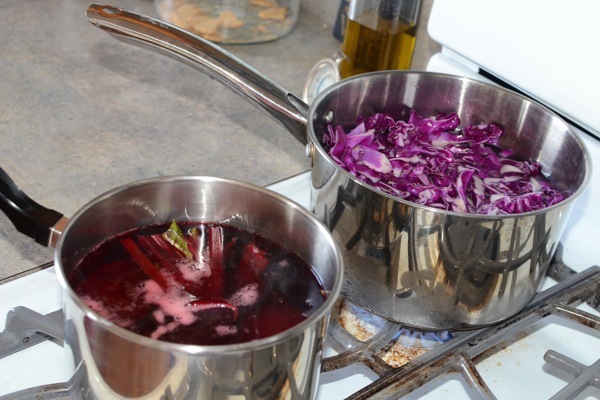
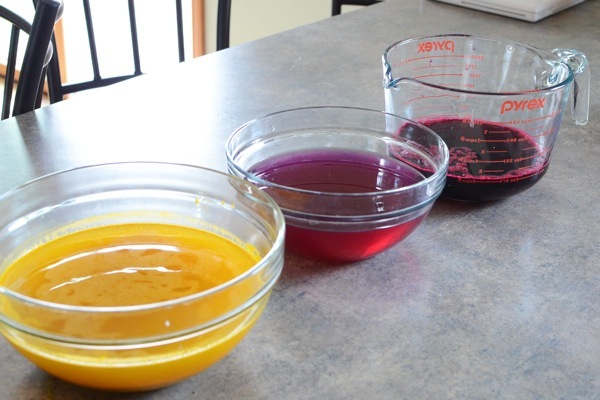
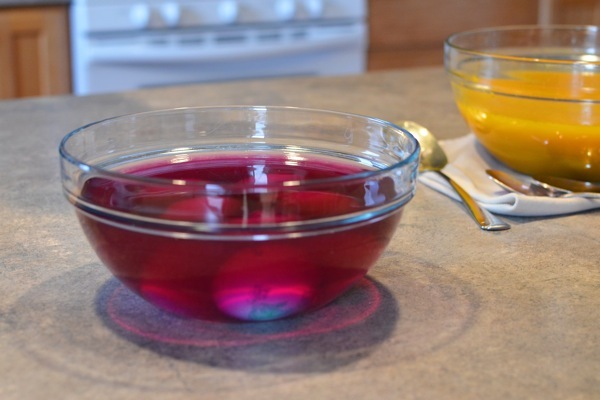
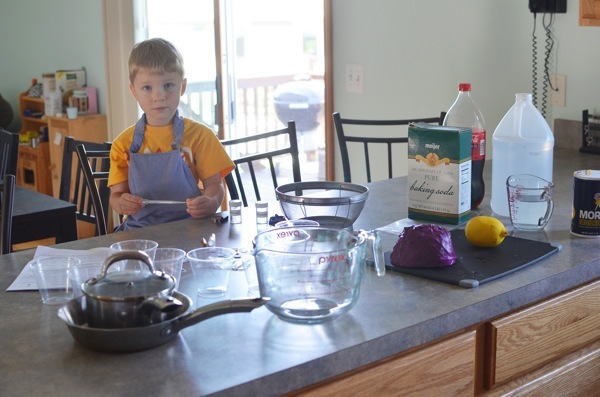
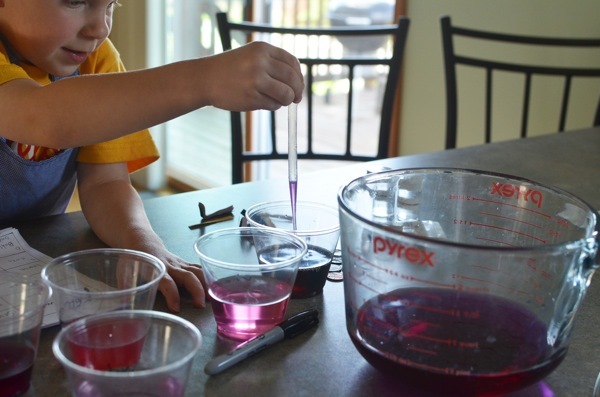
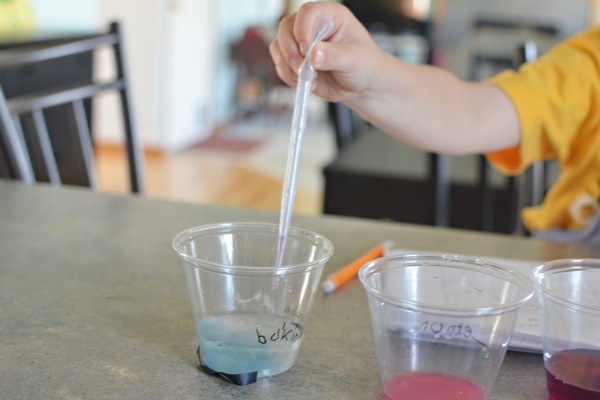
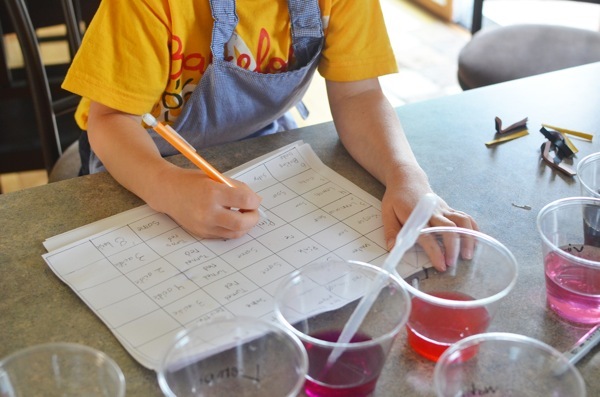
First I'll say we had a really good time. Calvin read the directions himself, and since there were a number of things needed that were not included in the kit he made a list and we ran to the store just down the street to collect them. We also made our own data table before getting started. Calvin recorded all the results in the table himself. The experiments included tasting several different substances, most of them acids (lemonade, lemon, vinegar, and cola), one base (baking soda), and one neutral (water), then testing them with blue and red litmus papers, pH paper, and red cabbage water. Some final steps included cleaning dirty pennies in cola (I can't believe people drink that stuff regularly), coating a nail in coper particles, and neutralizing an acid (the good old vinegar and baking soda trick). Calvin loved the whole process. In fact, the first thing he asked me this morning was if we could do another experiment.
My feelings about the kit, however, are mixed. It was nice to pull out a box and have the things we needed for the project, except that for this one we also had to make a store trip). And the instructions are concise, but they are written for an adult to read to a child, which I find irksome—if this is a kids kit the contents should be directed at "young scientist" not his mom. And then there's the quality. If I had paid the full $27 price tag I would have been hugely disappointed. Frankly, I would have felt that way if I'd paid the $22 Amazon sale price, but since I paid $12 on Zulily I'm only mildly annoyed. The equipment included is really cheap plastic and small in size, which might make sense for the use it will be getting, but not for that price. And of course the experiments are all throw-backs to any elementary school experience, which is also fine, but since they're pretty common sense I wonder at my sanity for having bought something I could have made myself. The cabbage water, for one, is a fun and easy no-instructions needed save the internet kind of experiment.
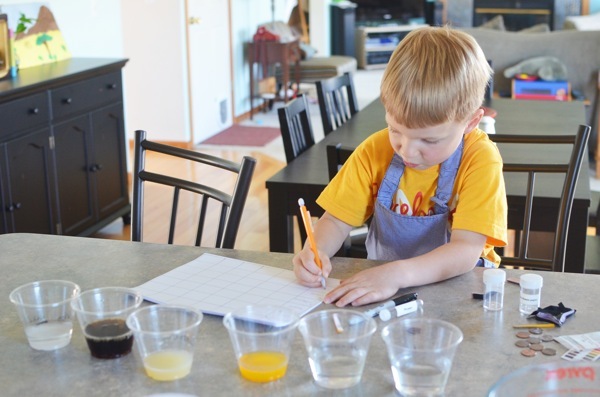
Acids are sour!
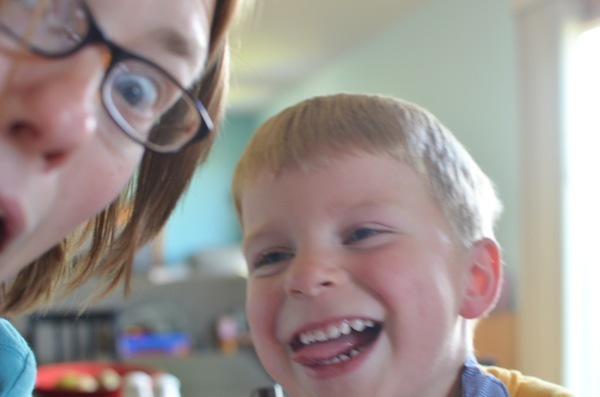

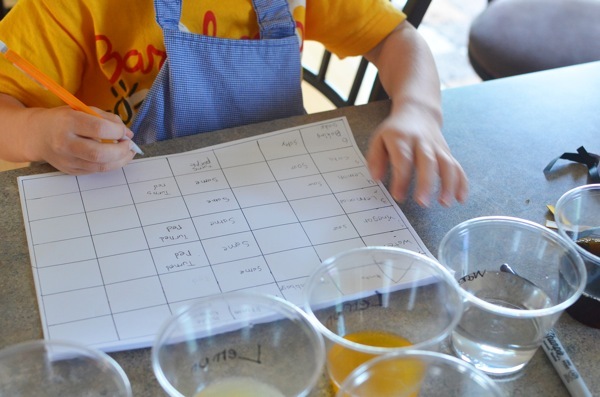
Litmus paper fun.
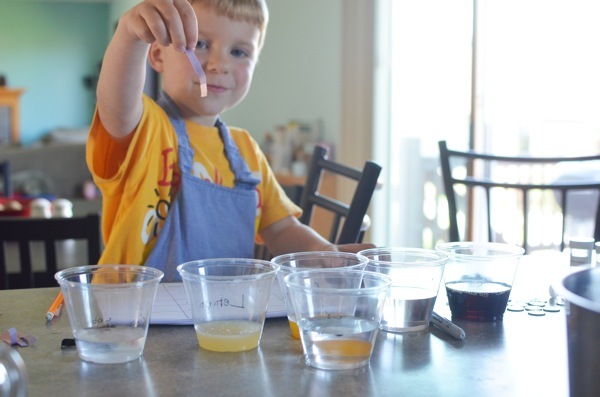
Mmmm...red cabbage test.
So for $12 I'm not upset that I bought the kit, but I am hoping that the remaining kits are more fulfilling.
 Science | tagged chemistry, experiments, reviews